You'll get straightforward explanations of how these systems work, their installation flexibility, simultaneous heating and cooling capabilities, and long-term reliability. We also explain why South Florida businesses trust Cooltrace International Corporation to design, install, and service VRF solutions tailored to their needs.
What is Variable Refrigerant Flow Technology and How Does It Work?
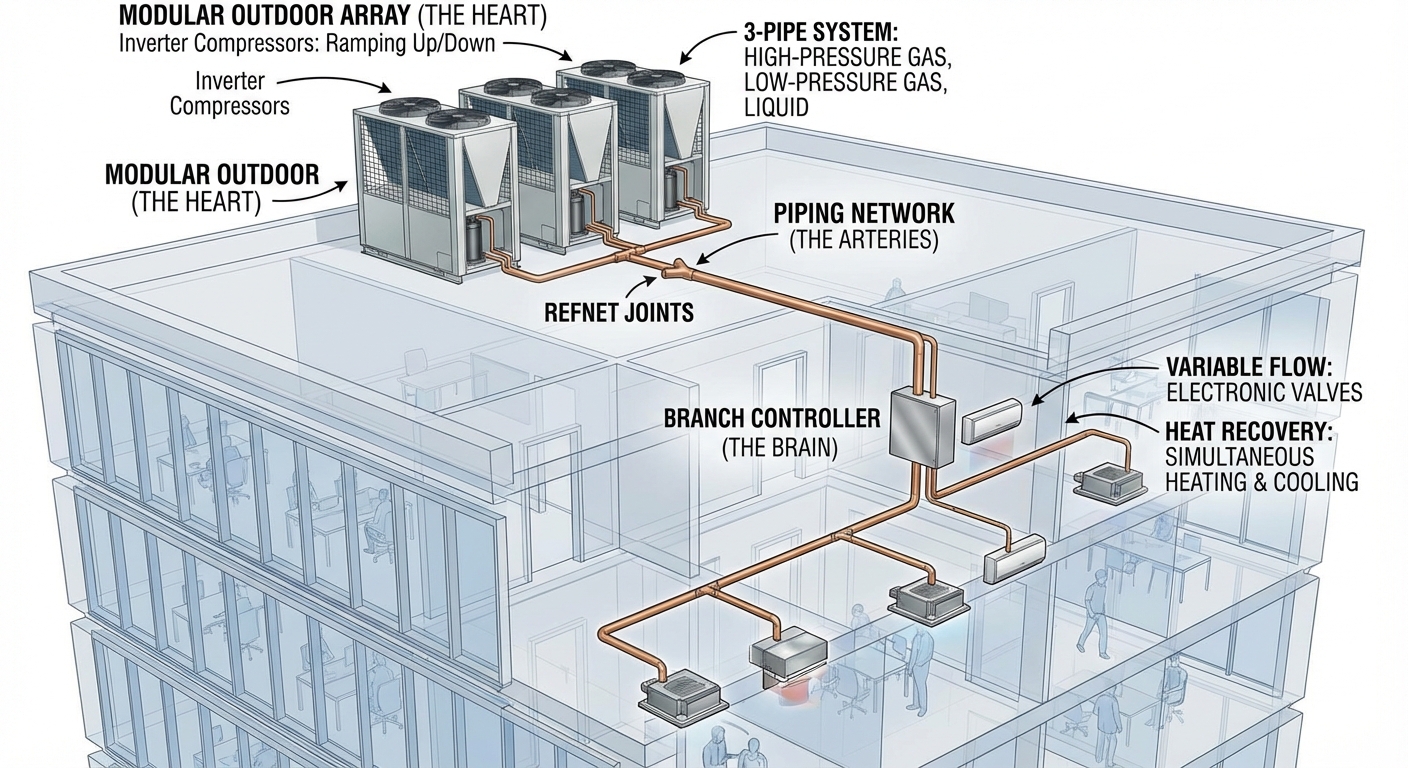
VRF uses refrigerant to move heating and cooling where it's needed, rather than relying on a single central system. Because inverter-driven compressors vary their speed, VRF equipment adjusts refrigerant flow to match each zone's demand. The result: precise temperature control across multiple spaces and better energy use than many traditional systems.
Research supports the clear energy and comfort advantages of VRF — while also noting areas where design and ventilation integration can be improved.
VRF Systems: Energy Efficiency, Comfort, and Commercial Applications
The variable refrigerant flow (VRF) air-conditioning system is widely adopted as an alternative to conventional building cooling due to higher energy efficiency and individualized temperature control. Persistent challenges include limited outdoor-air induction for ventilation and higher upfront cost. This paper reviews VRF and mechanical ventilation/air distribution designs for non-residential buildings, integrated system designs, performance evaluation, control optimization, fault detection and diagnosis, current applications, and associated challenges.
A comprehensive review of variable refrigerant flow (VRF) and ventilation designs for thermal comfort in commercial buildings, YH Yau, 2024
How Do VRF Systems Operate Using Inverter Compressors and Refrigerant Flow?
Inverter compressors let VRF systems ramp output up or down, matching the exact load instead of cycling on and off. Refrigerant is routed to indoor units where each zone's thermostat requests heating or cooling. That modulation cuts energy use, reduces temperature swings, and keeps occupants more comfortable than many fixed-speed alternatives.
Independent studies identify inverter compressors and smart controls as primary reasons VRF systems outperform conventional equipment under real-world loads.
VRF Energy Performance: Inverter Compressors & Intelligent Controls
Comparative analysis shows VRF and chiller systems deliver superior energy performance, largely because of inverter compressors and intelligent control strategies. By contrast, split and rooftop units, while simpler, tend to be less efficient under partial-load conditions. The report highlights automation, wider adoption of BLDC motors, and cleaner refrigerants as important trends for improving overall system efficiency.
A Comparative Energy Efficiency Analysis Between Inverter-Driven and Conventional Air Conditioning Systems, 2025
What Are the Differences Between Heat Pump and Heat Recovery VRF Systems?
Heat pump VRF systems supply either heating or cooling to a space. Heat recovery VRF systems go further: they move heat from zones that don't need it to zones that do, so some areas can be cooled while others are heated. That makes heat recovery ideal for mixed-use buildings and large facilities with different occupancy patterns, because it reduces overall energy demand and operating costs.
What is the Difference Between VRF and VRV?
VRF and VRV refer to the same technology: Variable Refrigerant Flow systems. The term VRV (Variable Refrigerant Volume) was first coined and trademarked by Daikin, a leading HVAC manufacturer. Essentially, VRF and VRV describe identical systems that use inverter-driven compressors to modulate refrigerant flow for precise temperature control. The difference is mainly in branding rather than technology.
What Are the Core Advantages of VRF Systems for Commercial Businesses?
For commercial customers, VRF systems deliver three practical wins: strong energy performance, measurable operating-cost reductions, and improved occupant comfort through precise zone control.
Energy Efficiency & Cost Savings
Typical VRF installations can cut energy use by roughly 20–40% versus conventional HVAC. Each zone is controlled independently, so energy isn't wasted conditioning unoccupied areas.
Precise Zone Control
Room-by-room control lets occupants set temperatures to match their needs, eliminating persistent hot or cold spots. That flexibility increases comfort and can improve productivity and tenant satisfaction.
Flexible Installation
VRF systems are compact and require little ductwork, so they fit well in tight retrofit projects or modern new builds. Less invasive installs, faster timelines, and better use of available space.
Why Are VRF Systems Ideal for Retrofits and New Commercial Construction?
Because VRF needs minimal ductwork and smaller mechanical rooms, it integrates cleanly into existing buildings without major demolition. On new construction, VRF supports flexible architectural layouts and efficient HVAC zoning from day one.
What Are the Benefits of Ductless or Minimal Ductwork VRF Installations?
Ductless or low-duct VRF reduces energy loss tied to long duct runs and limits dust accumulation in ductwork — both of which improve air quality and system efficiency. It also lowers installation labor and material costs while giving designers more freedom inside the space.
Can VRF Systems Provide Simultaneous Heating and Cooling Through Heat Recovery?
Yes. Heat recovery VRF systems move surplus heat from one area to another, enabling simultaneous heating and cooling where needed. This capability is particularly valuable in facilities with diverse space uses and fluctuating internal loads.
How Does Heat Recovery VRF Technology Work in Commercial Applications?
Heat recovery systems capture excess heat from zones calling for cooling and redirect it to zones calling for heat. For example, heat from a busy kitchen or sunlit west-facing offices can warm meeting rooms or perimeter zones — reducing the need for extra energy input and improving overall system efficiency.
What Are the Benefits of Simultaneous Heating and Cooling for Diverse Building Needs?
Being able to heat and cool different zones at once keeps each area at its ideal setpoint without overworking the system. That flexibility is crucial in hotels, mixed-use buildings, multi-tenant offices, and retail centers where occupancy and internal loads vary throughout the day.
What Are the Long-Term Reliability and Maintenance Benefits of VRF Systems?
VRF systems are built with commercial-grade components and typically show strong durability. With proper preventive maintenance, they can run reliably for many years while minimizing unplanned downtime and expensive overhauls.
How Do VRF Systems Ensure Durability and Extended Lifespan?
High-quality components, variable-speed compressors, and balanced refrigerant management reduce mechanical stress and cycling. When combined with routine inspections and timely service, these design features extend equipment life and protect your investment.
What Maintenance Practices Reduce Wear and Tear in VRF Technology?
Routine maintenance keeps VRF systems efficient: clean or replace filters, inspect indoor and outdoor units, verify refrigerant charge, and test control logic. Scheduled professional tune-ups help catch small problems before they become costly repairs.
Why Should South Florida Businesses Choose Cooltrace for VRF HVAC Solutions?
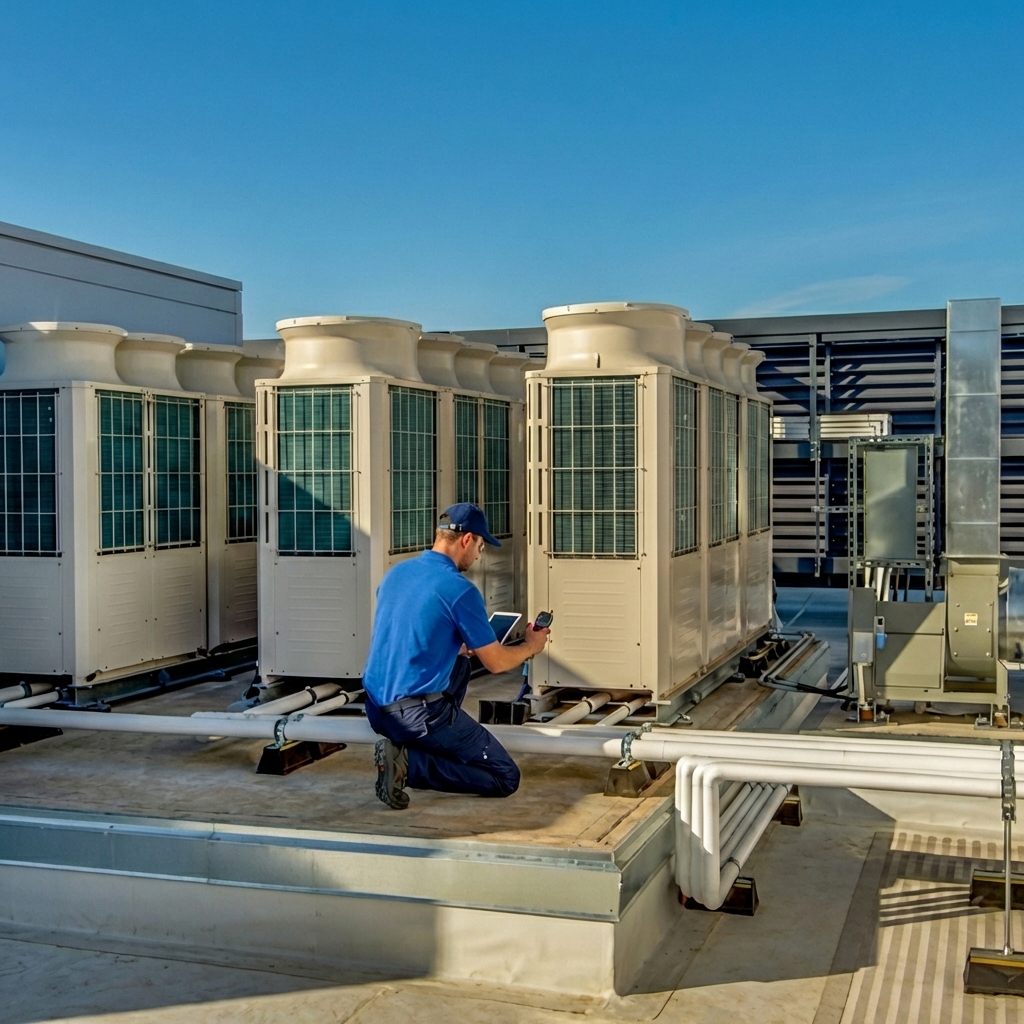
Cooltrace International Corporation brings local experience and HVAC know-how to every VRF project. With more than 25 years in the field, we engineer systems to match each client's operational needs, budget, and long-term efficiency goals.
What Expertise and Experience Does Cooltrace Bring to VRF Projects?
Our team combines hands-on installation experience with design expertise, ensuring systems are sized, controlled, and commissioned for peak performance. We work with owners, architects, and contractors to deliver reliable VRF solutions that meet project timelines and performance expectations.
How Does Cooltrace's 24/7 Service and Customer Satisfaction Support Businesses?
Cooltrace provides around-the-clock service so businesses can keep operating without HVAC interruptions. Our commitment to responsive support and preventative maintenance helps reduce downtime and keeps systems running efficiently year after year.
VRF Feature Summary
| Feature | Benefit | Impact Level |
|---|---|---|
| Energy Efficiency | Reduces utility costs | High |
| Zone Control | Enhances occupant comfort | High |
| Flexible Installation | Adapts to various building types | Medium |
This table summarizes core VRF features and the business benefits they deliver, showing why VRF is a smart option for many commercial projects.
Conclusion
Variable Refrigerant Flow (VRF) systems offer clear, measurable advantages for commercial properties: better energy performance, lower operating costs, and improved occupant comfort through precise zoning. Combined with Cooltrace's local experience and 24/7 support, VRF is a practical path to more efficient, reliable HVAC for businesses in South Florida. Contact us to learn how VRF can be tailored to your building and budget.